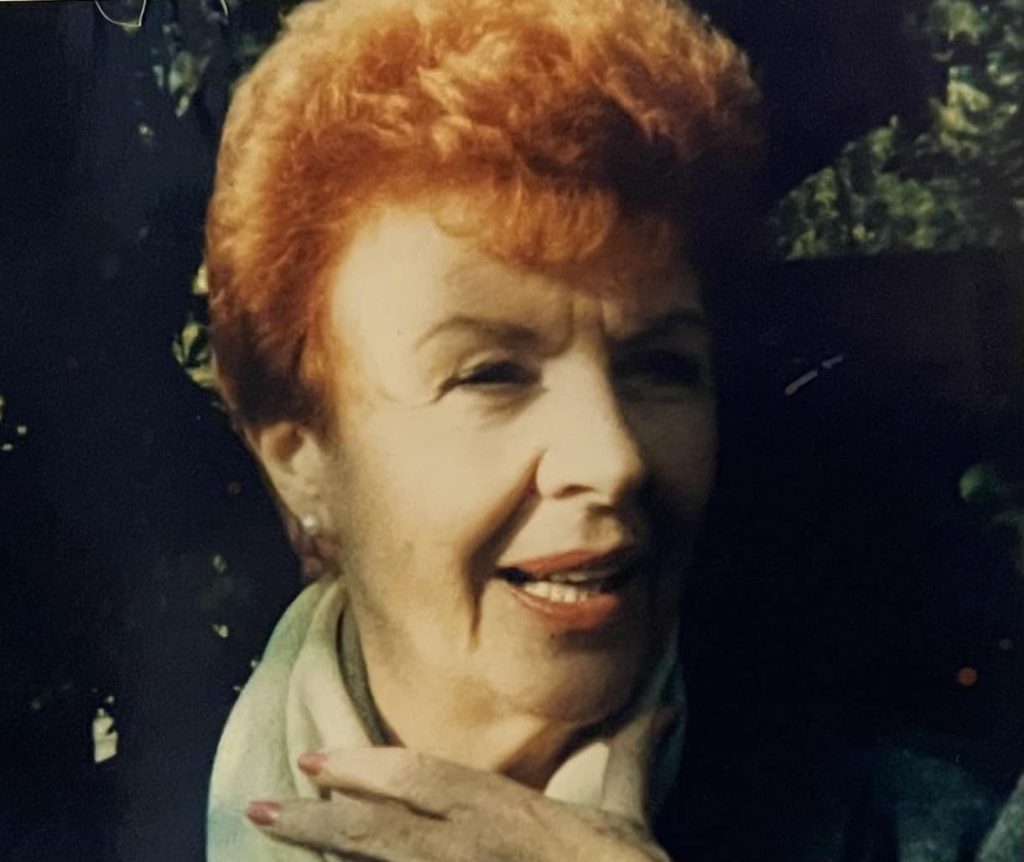
Born Joan Noel Gordon at 139 Clements Road, East Ham, London, on December 25, 1919, Noele Gordon would go on to become a leading force in the launch of ATV Midlands and one of British television’s most groundbreaking personalities.
Born to seaman James Gordon OBE and housewife Joan, she began attending a dancing and acting school at weekends when she was just two years old. The classes were held at St Barnabas Church Hall and were run by teacher Maude Wells. Six months later, she made her stage début at the long-demolished East Ham Palace, singing Dear Little Jammy Face.
When Noele was a teenager, the family moved to 201 Woodford Avenue, Gants Hill, Ilford, Essex. In 1929, aged nine, she won the top prize in a singing contest at The Ilford Convent, where she studied until she was 15.
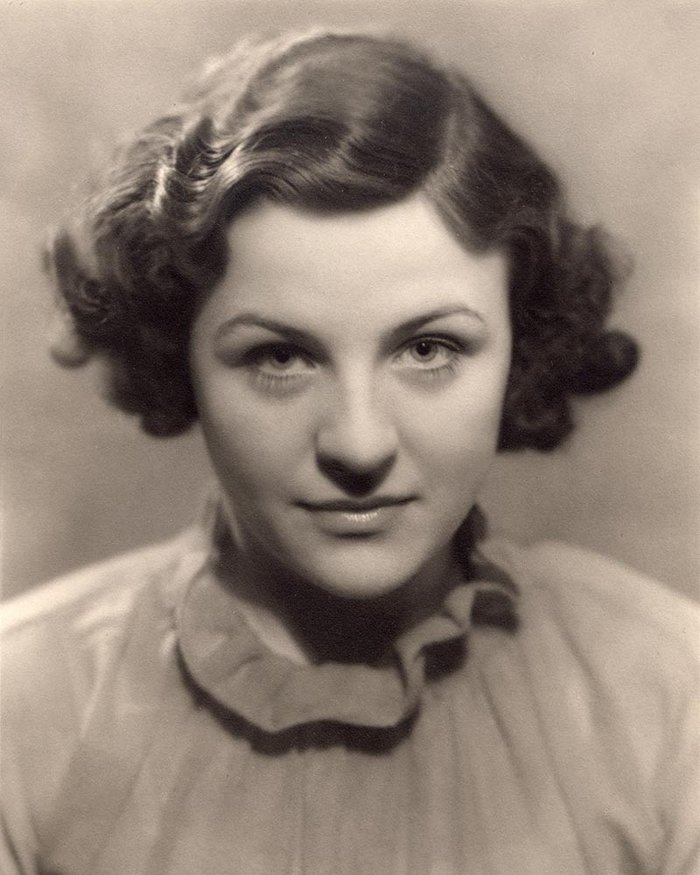
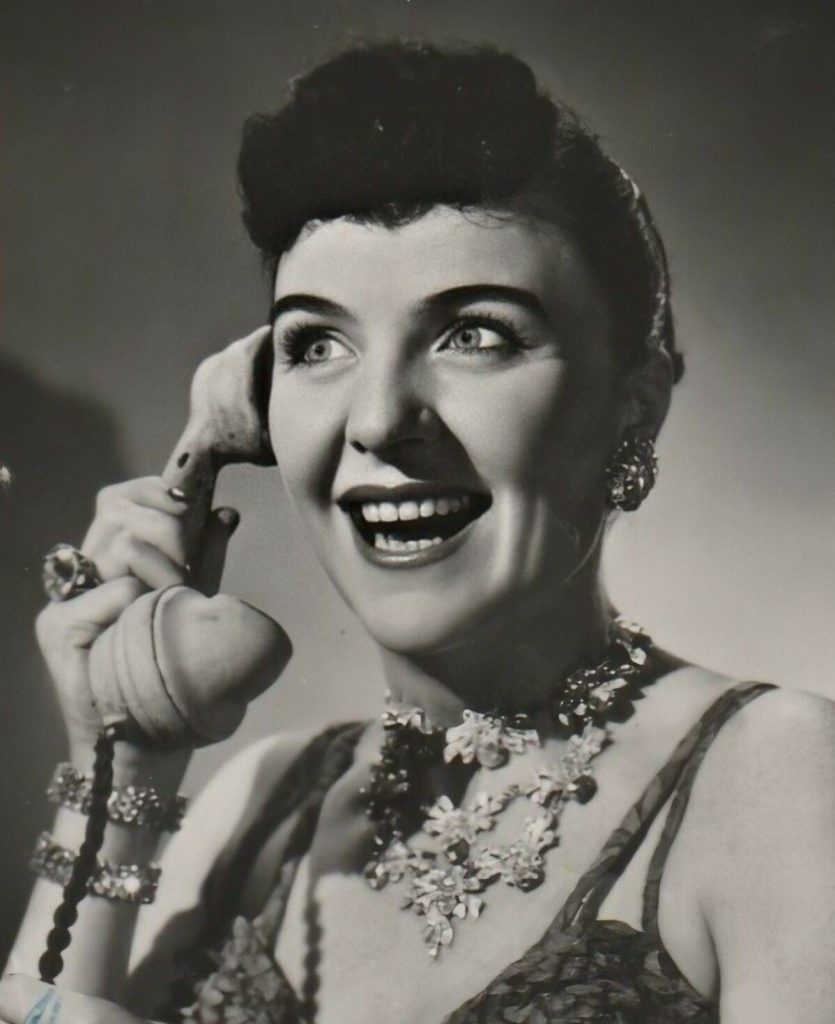
On September 26, 1934, Noele was accepted into the Royal Academy of Dramatic Art — RADA — where she performed everything from Shakespeare to Eliza Doolittle in Pygmalion. This led to her first major professional work in 1940, when she appeared in the musical Black Velvet.
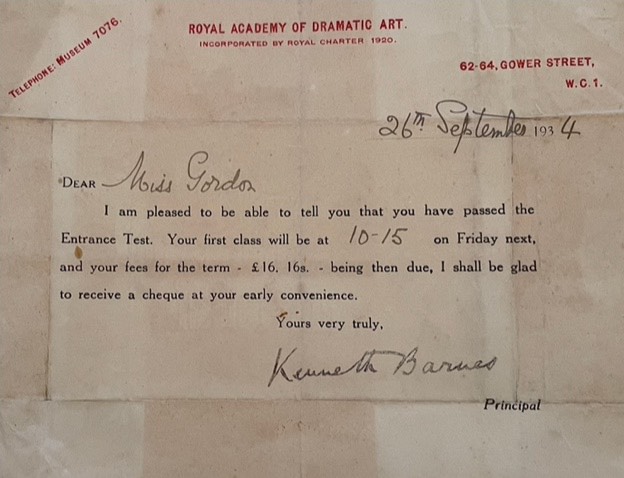
Nolly’s acceptance letter into RADA and her official photograph
Theatre and the birth of a television career
For a time, Noele worked in repertory theatre productions touring the UK, appearing alongside newcomers such as Roger Moore. She also worked with John Mills in the comedy Aren’t Men Beasts?
In 1937, she undertook her first official television work when she was hired to appear in the BBC’s first major live drama produced at Alexandra Palace. Playing an Irish maid in Ah! Wilderness! — a role she had previously performed on stage — she discovered that television presented its own hazards.
Studio lighting in those days was considerably more intense than theatre lighting because television cameras required much more illumination to transmit a decent picture. Under the heat of the lights, the prop tray she was using as the maid became so hot that it burned her fingers.
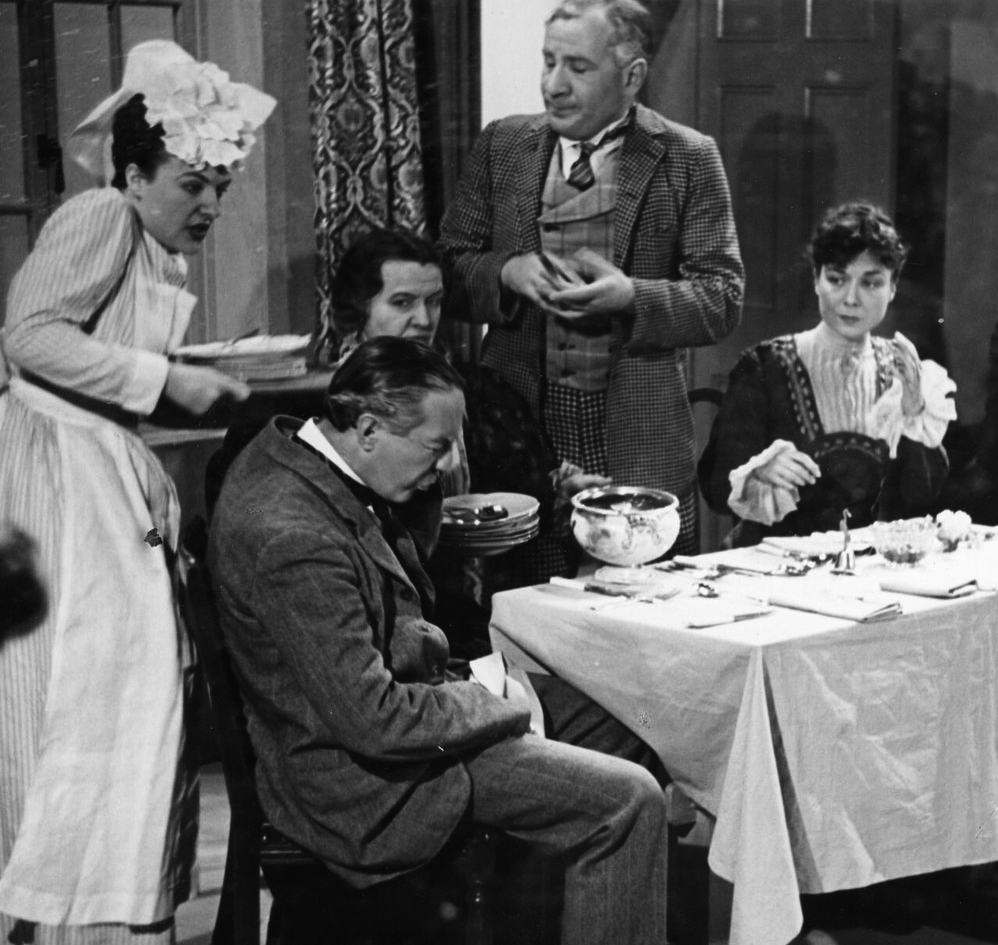
Her work in live BBC television dramas led to further employment with the corporation, including numerous BBC Radio drama productions. At this time, Noele’s London base was 45 Cumberland Mansions, Bryanston Square, London, W1.
1937 was also the year she changed her name from Noel Gordon to Noele Gordon, at the suggestion of theatre mogul George Black. The change was intended to prevent theatre-goers from assuming from the billing that she was a male performer. Black reportedly told her that, having heard her sing, he would “make a star of Noele”.
A year later, television pioneer John Logie Baird hired Noele to take part in his colour television experiments. Later that year, she became the first woman to be transmitted in colour from a camera to television sets. Earlier tests had shown static photographs in colour; this was the first transmission of a moving image in colour.
She also worked with Baird at the Tottenham Court Road Cinema, where he undertook experiments in “widescreen television” using the cinema’s large screen.
West End success
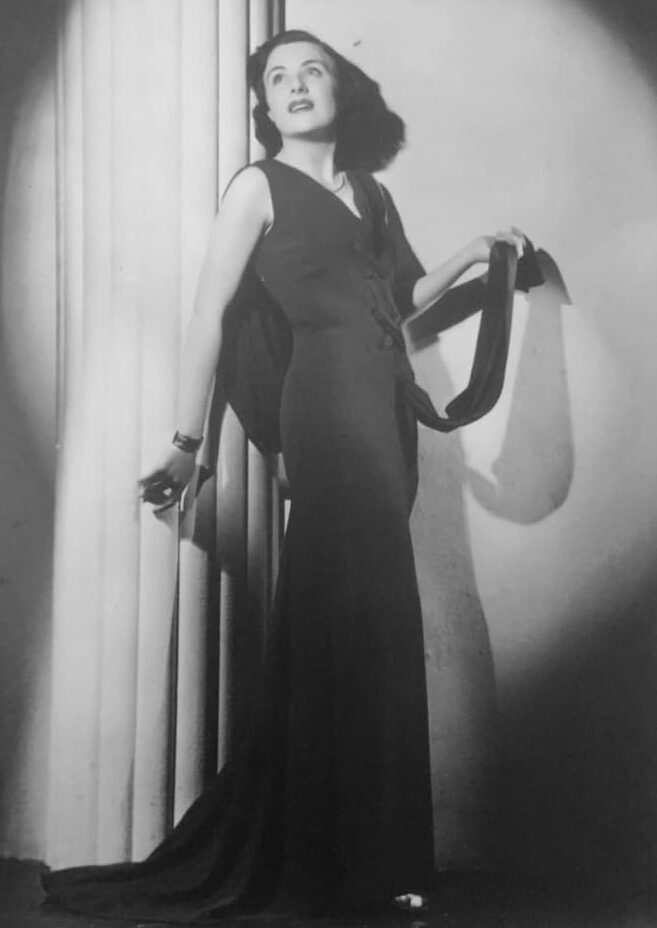
As the 1930s became the 1940s, Noele established herself as a star of London’s theatre world. In 1941, she made her West End début in Let’s Face It with Bobby Howes.
Her biggest theatrical success of this period was the musical Brigadoon, in which she appeared in more than 1,000 performances during its two-year run. Frederick Loewe, composer of the Brigadoon songs, was so impressed by the way Noele interpreted his words that, on seeing her performance, he jokingly offered to marry her.
The critical response to Noele was equally encouraging. Her other stage appearances included Big Ben, The Lisbon Story, Rain and Suspect, as well as the pantomime Humpty Dumpty at the prestigious London Palladium.
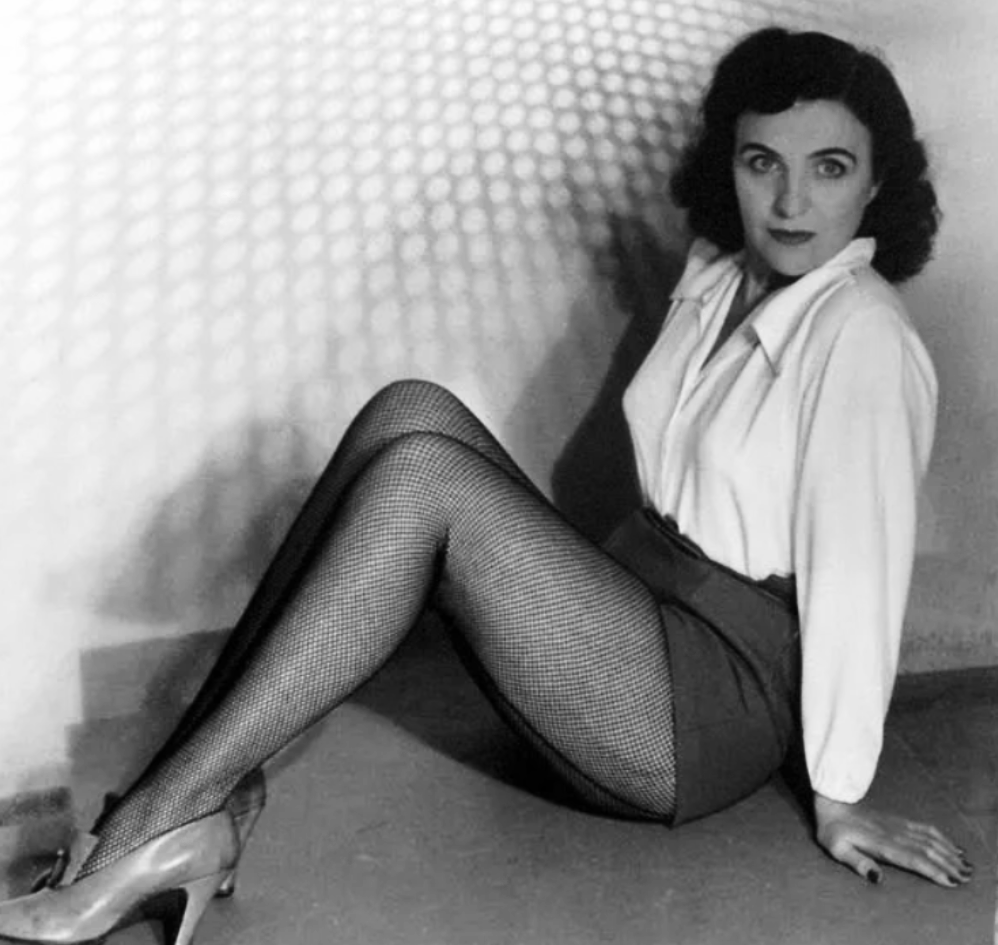
She also achieved a theatrical first when she became the first actress to star concurrently in two West End productions.
While taking over from Julie Wilson in the starring role of You Bet Your Life with Arthur Askey, Noele also remained an understudy in Call Me Madam to Billie Worth.
On February 28, 1941, Noele announced in the London press that she was to marry Captain John Robertson Dunn Crichton. His well-to-do family, however, disapproved of him marrying “an actress”, and at the last minute the wedding was cancelled. It appears to have been something Noele never fully accepted, and she subsequently refused to marry anyone else.
In later years, she kept Crichton’s name out of interviews concerning their relationship, apparently not wishing to embarrass him. By the 1960s, he had become a well-known High Court judge. On May 19, 1967, at Buckingham Palace, he was knighted by Queen Elizabeth II.
The war years
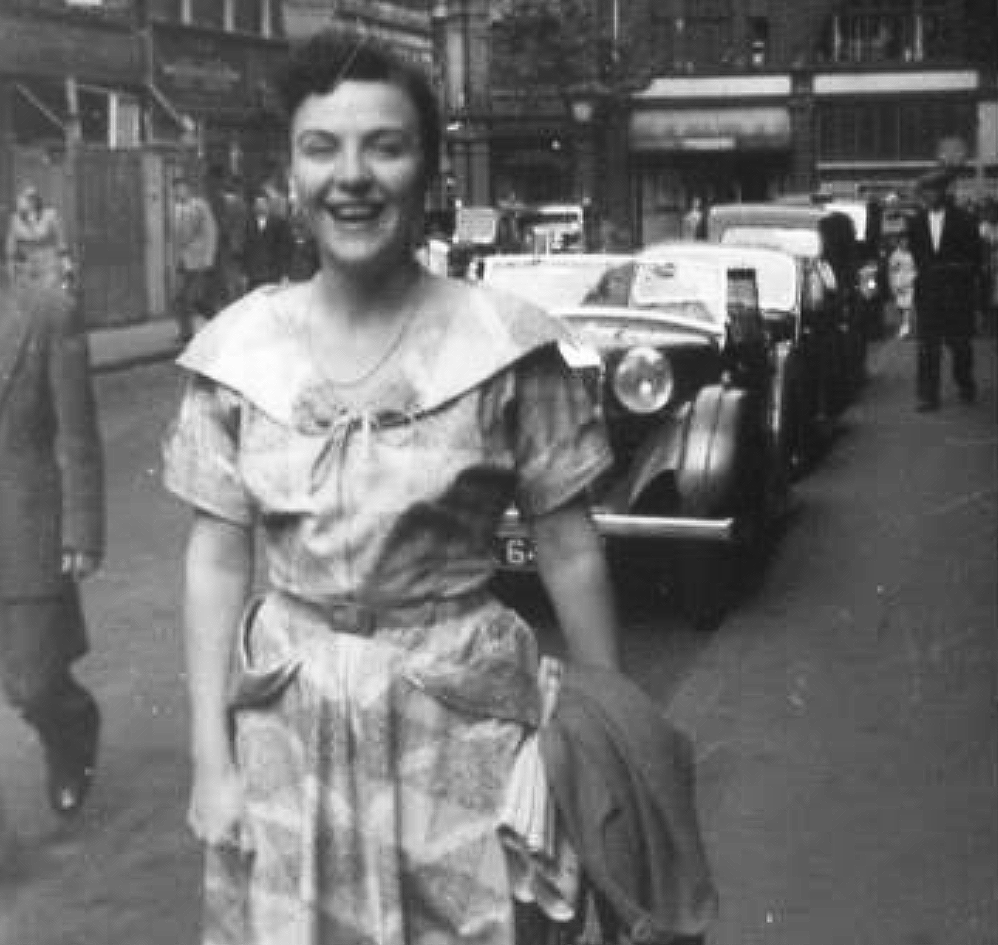
During the Second World War, Noele continued working in theatre productions while also performing as part of ENSA — the Entertainments National Service Association — a performance organisation created to entertain and raise the morale of troops with variety shows in Britain and abroad.
Other performers involved with ENSA included singer Vera Lynn, singer-songwriter Ivor Novello and comedian and magician Tommy Cooper, to name only a few.
Founded in 1939 by impresario Basil Dean and the British Government, the organisation eventually became Combined Services Entertainment, which continues to operate to this day.
In 1945, Noele made the first of her two feature films. She had a minor role as a neighbour, Mrs Wilson, in 29 Acacia Avenue, made for Columbia Pictures.
The following year, British National Pictures made a film version of The Lisbon Story, produced at Neptune Studios in Borehamwood — the site that would become ATV Elstree in the 1960s. Noele had a much larger role in the film, playing Panache, a character specially devised for her in the stage version.
29 Acacia Avenue has been released on DVD, while The Lisbon Story is viewable at the BFI archive in London.
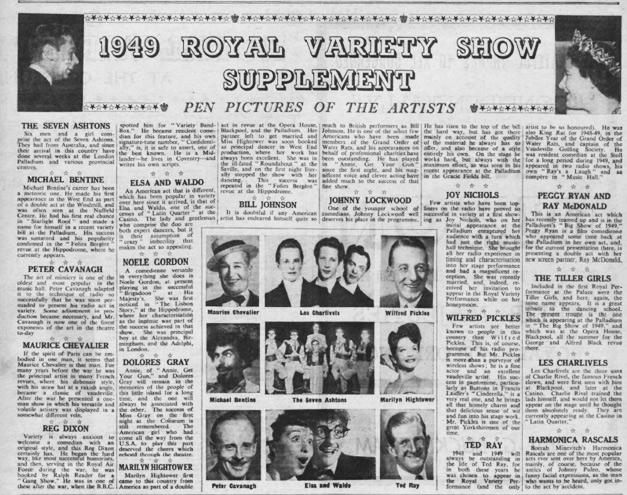
In 1949, Noele appeared in her first Royal Variety Performance, performing with the cast of Brigadoon, who presented a segment from the musical for King George VI and Queen Elizabeth.
By the 1950s, Noele was on the books of the Grade Agency.
From the London Palladium to American television
In 1951, Noele was Principal Boy at the London Palladium, appearing alongside Norman Evans, Terry-Thomas, Peggy Mount and Jean Bayless in Humpty Dumpty. Leslie Sarony wrote the song The First Time You Fall in Love especially for Noele.
Knowing of her previous experience with television production, Lew Grade — who was planning to launch a new ITV regional television company — sent Noele to America in 1954, following a final UK theatre tour of Brigadoon.
She spent a year studying television production at New York University and made hours upon hours of notes about the kinds of programmes being broadcast by the American networks, including their hour-long daily soap operas.
While in New York, she was also hired by a local CBS affiliate station as a continuity announcer.
In 1955, Lew Grade’s Associated Television was awarded two ITV licences: one for London weekends and the other for weekday broadcasting in the Midlands.
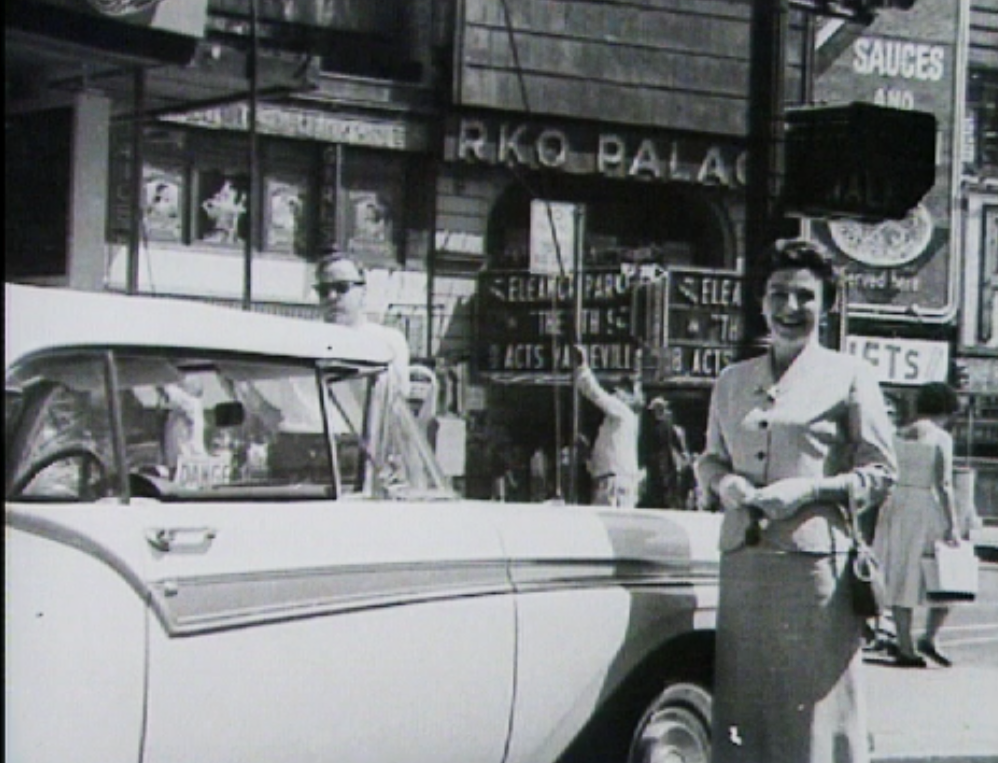
Noele became the first female television executive in British commercial television when she was hired to oversee lifestyle output, a responsibility she would also undertake in the Midlands.
She was part of the team that helped produce the first night of “Independent Television” in the UK on September 22, 1955. The evening was co-produced by ATV — briefly called ABC at the time — and Associated-Rediffusion. From ATV, Noele, Reg Watson and Ned Sherrin were among those working on that historic first evening.
When ATV London began broadcasting on September 23, 1955, Noele was part of its very first programme, The Weekend Show, which fell within her lifestyle remit. As well as being the executive responsible for the area, she script-directed some of these programmes and appeared on screen as one of the talking heads discussing women’s issues.
At ATV London, she also hosted a live fashion show from Oxford Street and became the host of ITV’s first chat show, Tea with Noele Gordon, which she also produced.
In November 1955, Noele spent a month in Birmingham, based in dressing room 2 at the Theatre Royal. Working with senior outside-broadcast producer Stephen Wade and secretary Pauline Tyler, her task was to develop programme ideas for ATV Midlands’ schedules.
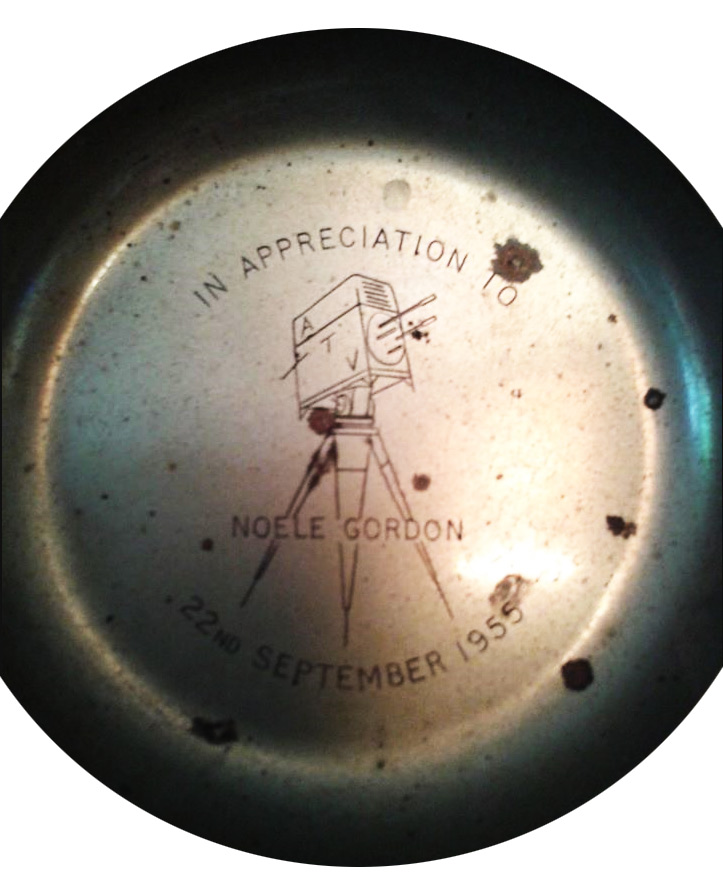
ATV Midlands
In 1956, Noele relocated to Birmingham to work for ATV Midlands as Head of Lifestyle and Women’s Output. Other members of the Midland management team included Reg Watson as Head of Entertainment, Ned Sherrin as Head of Factual and News, and General Programme Controller Philip Dorté.
During the week, she resided at The Queens Hotel in Birmingham, returning to her London flat at weekends.
Although based in the Midlands as an executive, Noele remained a major on-screen presence on both ATV London and ATV Midlands. Nolly later recalled that, at one point, she was presenting as many as ten programmes across both stations in a single week.
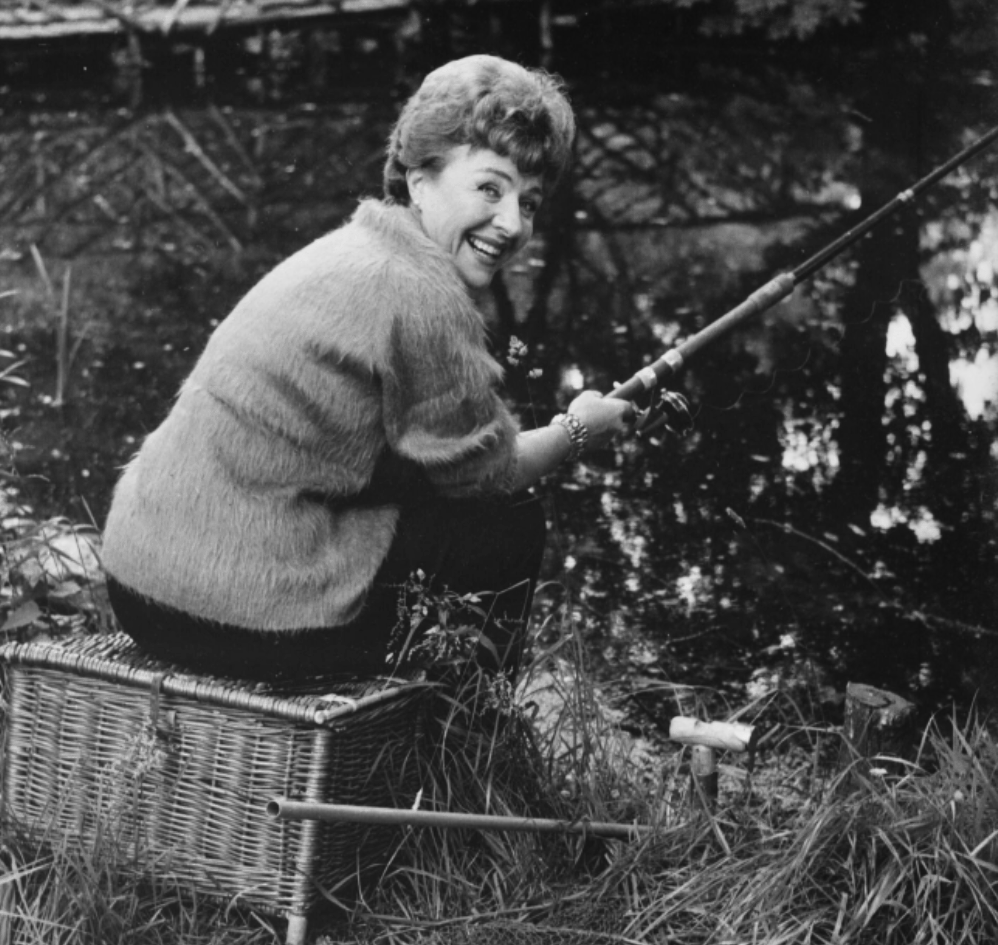
For the Midlands region, she presented — and produced — the advertising magazine programme Fancy That? She became ITV’s first female sports presenter when she reported on and hosted Midland Sport, and later presented her own fishing programme, A New Angle on Noele Gordon, which focused on angling.
Often described as a “have-a-go girl” — the original Anneka Rice, if you like — Noele also fronted her own series Noele Gordon Takes The Air, in which she learned to fly a plane and successfully did so.
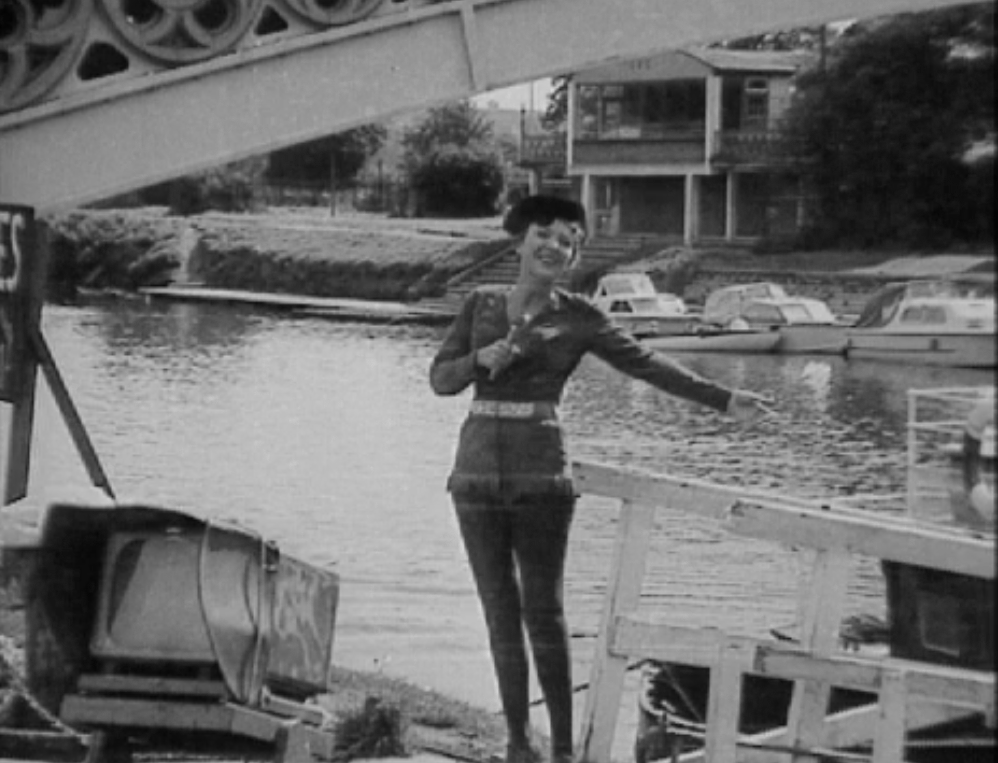
In late 1956, ATV launched Lunch Box, the first weekday daily live lunchtime variety, chat and music programme.
Lunch Box became a huge success for both Noele and the company. On numerous occasions, its Friday outside broadcasts attracted far larger audiences than expected. In Nottingham, for example, an anticipated audience of 3,000 became 27,000.
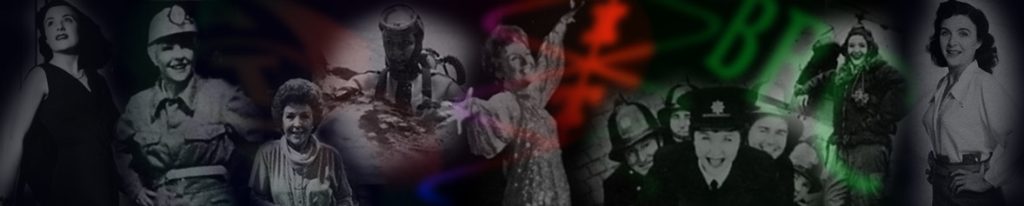
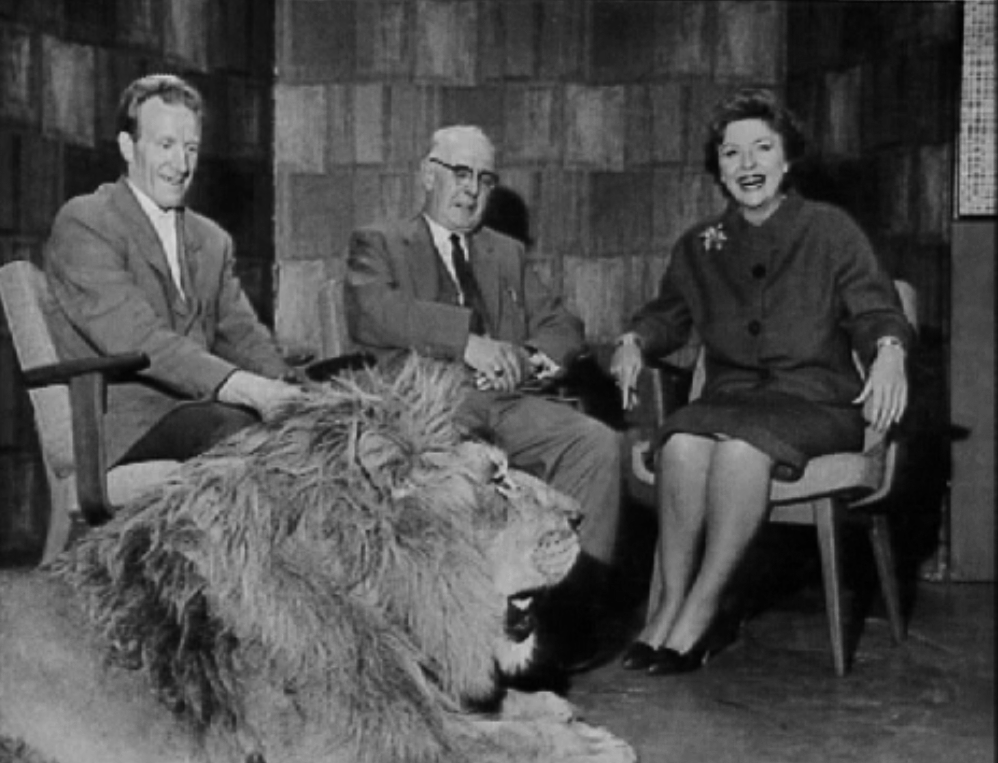
Noele’s “have-a-go” image was put to full use on Lunch Box. Over the years, she went skin-diving, became a firefighter, accompanied a sea-rescue team, trained as an Army soldier, rode a camel and a horse, drove a racing car and a steam train, performed with Chipperfield Circus — including bear and lion training — went mountain climbing, and became both a coal miner and a sweet-factory worker, to name only a few.
In late 1959, she commuted between Birmingham and London, continuing to host Lunch Box during the week while presenting a live, glitzy prime-time entertainment series from the Talk of the Town nightspot in London on Saturday nights for ITV. This became Noele’s first regular prime-time series.
The Queen of ATV
With her success, Noele was able to afford a large house in the country. In 1963, she moved into Weir End in Ross-on-Wye, Herefordshire. Later, she also rented a “penthouse” flat in Cleveland Tower in Birmingham city centre, where she stayed while recording programmes for ATV, returning to Weir End for the weekend. Before this, ATV had paid for her to stay in hotels in the city during the week.
As a reporter for ATV News in 1958, Noele became the first woman to interview a Prime Minister — Harold Macmillan. An extended version of the interview also aired on Lunch Box.
She fronted ATV’s first-anniversary and fifth-anniversary programmes, interviewing stars including Matt Monro, Bill Owen, Cliff Richard, Frankie Howerd, Bernard Bresslaw, Joe Loss, Arthur Askey, Morecambe and Wise, Ken Dodd, Beryl Reid, Bob Monkhouse and many others who had previously appeared on Lunch Box.
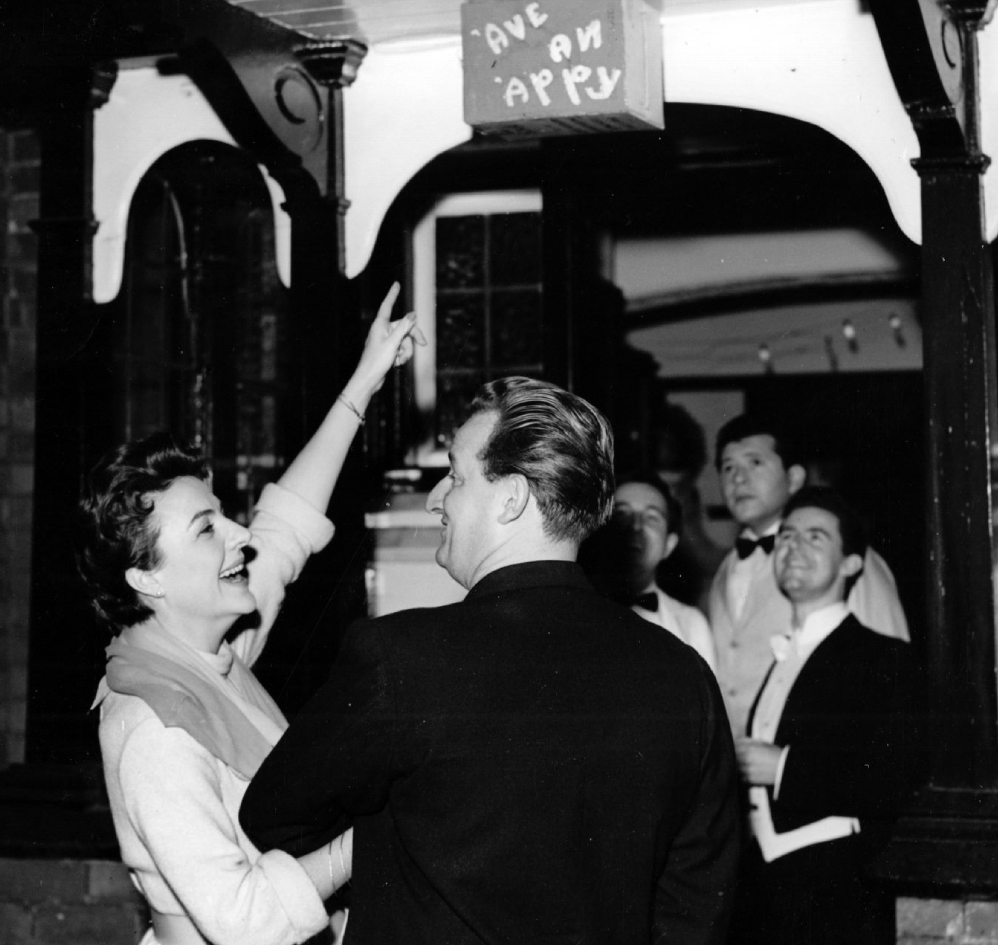
In 1962, she was celebrated as one of the Women of the Year, reflecting her extraordinary popularity with ITV viewers. In 1970, she was one of the Pye Ladies of Television, alongside Angela Rippon, Judith Chalmers, Katie Boyle and Thora Hird, among others, who were celebrated at a special lunch.
During the late 1950s and early 1960s, Noele was also kept busy answering fan mail, thanks to the Noele Gordon Fan Club, founded by enthusiastic Lunch Box viewers.
Her private life, however, remained quite different from her professional success.
In 1963, a twenty-year affair with theatre and ATV executive Val Parnell came to an end when he left Noele and decided to divorce his second wife of 25 years, Helen Howell. Noele later revealed that the two women had “happily shared” Val on their own terms over the two decades.
Noele had apparently been quite happy not to have to deal with a marriage proposal. However, when Val left both women for a younger actress, Aileen Cochrane, Noele was left devastated.
From Lunchbox to Crossroads
In 1964, Lunch Box was moved to a teatime slot and rebranded as Hi-T.
Throwing herself into her television career between 1955 and 1964, Noele also hosted numerous other ATV series, including Midland Profile, a one-to-one chat show with stars of the day; Midland Scene, which explored the region through its everyday people and places; and Midland Farming, made for local rural communities.
In the summer of 1964, Noele made a guest appearance as herself on the medical saga Emergency Ward 10. The storyline that allowed for her appearance centred on a hospital open day and garden party.
In August 1964, Noele was told that Hi-T was to be axed. It was to be replaced with a faster-paced version of the American soap-opera format she had encountered years earlier in the United States.
The replacement was Crossroads.
Cut to 25 minutes rather than an hour, Crossroads was to become the UK’s first full-length daily serial.
From November 1964 until November 1981, Noele appeared as Meg Richardson, later Meg Mortimer, the owner of the Crossroads Motel in the hamlet of Burbank near the fictional village of Kings Oak.
As Meg, she once again became a ground-breaker. Nolly became the nation’s most popular female television star, winning more awards than any other between 1968 and 1981. She was the first celebrity to be placed in the TV Times Hall of Fame and was honoured with her own fashion range, released as a Style “create your own” dress-pattern series.
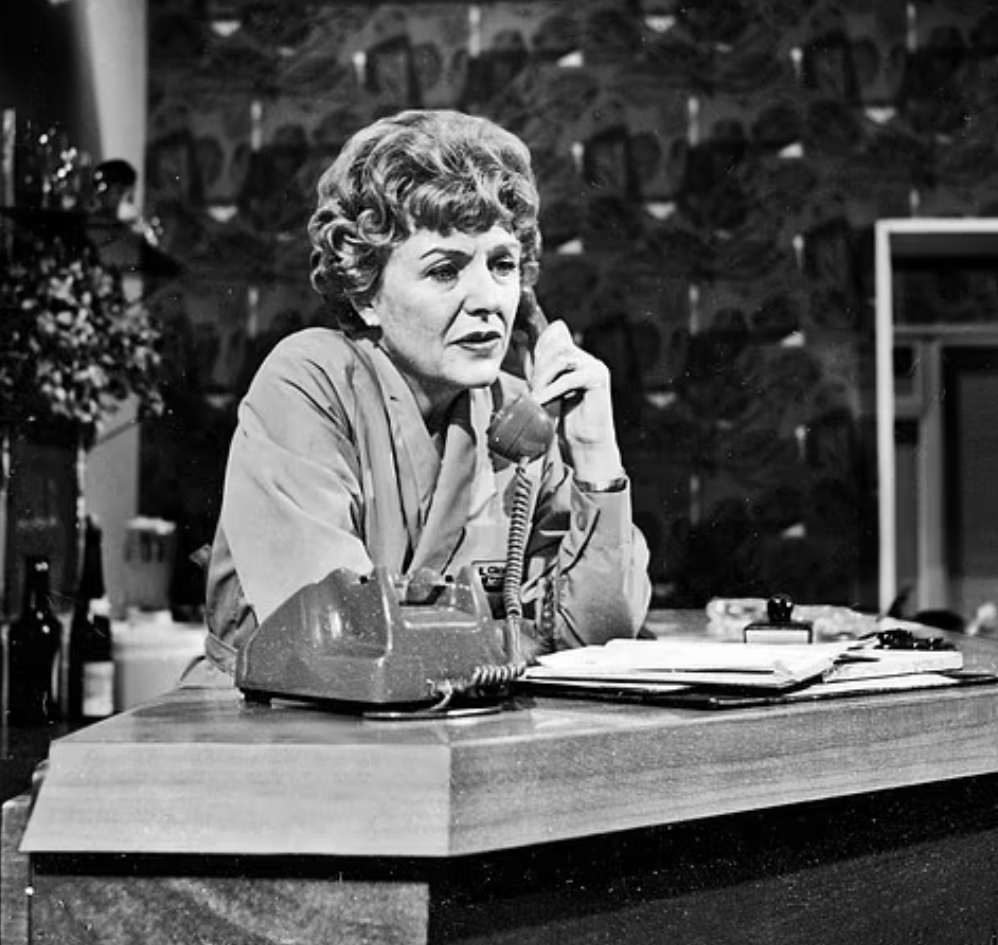
In 1975, Crossroads reached a peak in popularity when Noele’s character, Meg, married Hugh Mortimer, played by John Bentley. The event brought Birmingham city centre to a standstill when 10,000 viewers turned out to see the couple.
Throughout the 1970s, Crossroads, a daytime soap, regularly topped the television ratings, not only for ITV but at times even beating BBC productions.
The “firsts” continued.
In June 1969, following Reg Varney’s earlier pioneering use of the technology, Noele became the first person to use a “cash point”, or “cash dispenser” as it was then called, in the Midlands. She withdrew £10 from the Bennetts Hill branch of District Bank Limited in Birmingham.
In 1973, Noele sold Weir End Lodge in Ross-on-Wye in order to be closer to the ATV studios. She built a luxury apartment at 12 Handsworth Wood Road, Birmingham.
In February of the same year, she was the subject of This Is Your Life, broadcast by Thames Television.
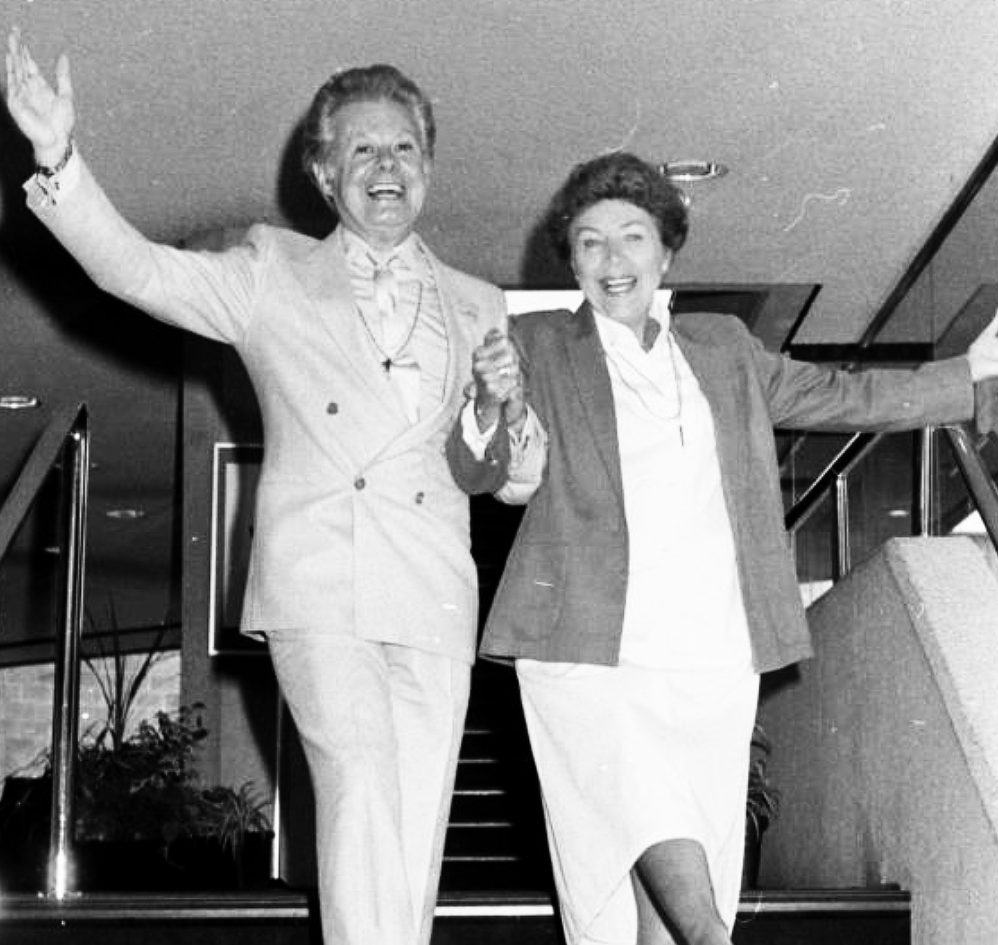
In 1974, she returned to the London Palladium to appear alongside her close friend Larry Grayson in his variety show. Later that year, she took to the stage in her second Royal Variety Performance.
This time Noele was the host of the show, making her the first female host of the Royal Variety event. She performed in front of the former Queen Elizabeth, The Queen Mother.
There was also a romance with New Faces performer and former fishmonger-turned-singer Anthony “Tony” Waters.
In 1976, Noele recorded an album for EMI, Noele Gordon Sings, at Abbey Road Studios in London with Geoff Love and his orchestra.
In 1978, she hosted Golden Gala for ITV, and in 1980 she co-hosted Summer Royal alongside Bernie Clifton.
Later television and return to the stage
After Crossroads, Noele was offered an occasional role as a personality at TV-am. Her theatre commitments limited her involvement with the breakfast station, although she did make several appearances for the fledgling early-morning company.
She also made a brief return to Crossroads in 1983 for the wedding of her on-screen daughter.
During the 1980s, she returned to the theatre in productions including Gypsy, The Boy Friend and a revival of Call Me Madam.
In 1983, she also toured in her own one-woman show about the life of Cosima Wagner.
Her theatre performances, as in the 1930s and 1940s, received positive reviews and proved popular with audiences.
This triumphant return to the stage was marred only by an extraordinary incident following a performance of Gypsy, when a “crazed fan” attempted to stab Nolly. She was saved when fan Sharan Roberts intervened. Together with several other fans, they managed to disarm the obsessed attacker and take away his knife.
Death and legacy
Noele died from cancer on April 14, 1985, following a number of operations over the previous two years in an attempt to beat the illness.
ITN reported that her funeral was for “The Queen of British Soaps”.
That same month, Nolly had been due to return to Crossroads on screen. New producer Phillip Bowman had persuaded her to return to the serial. She had signed the contract, and the scripts had been written.
Sadly, it was never to be.
Noele was buried at St Mary’s Church in Ross-on-Wye, near Hereford, where thousands of fans turned out and packed the church grounds to say goodbye. She is laid to rest next to her mother, Joan.
In May 1985, a memorial service for Noele was held at Birmingham Cathedral.
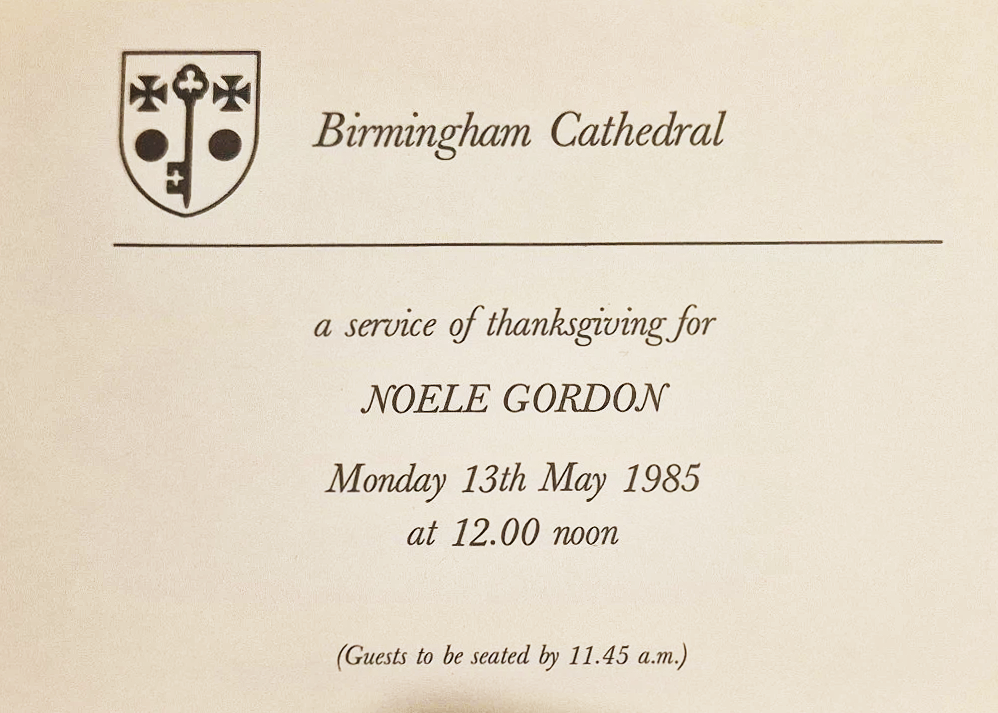
Guests included Susan Hanson, Jean Bayless, Jane Rossington, Tony Adams, Ronald Allen and Sue Lloyd, along with many of the other Crossroads cast members.
Among Noele’s many friends attending were Roy Hudd, Bob Monkhouse, Shaw Taylor, Derek Batey, Wayne Sleep, Russell Harty, Larry Grayson, Moira Lister, Jack Haig, Danny La Rue, Kathy Staff, Terry Wogan, Su Pollard, Fiona Fullerton, Leslie Crowther, Janet Brown, Max Bygraves, Honor Blackman and Nicholas Parsons.
Special messages were sent by Lord Lew Grade and Patricia Phoenix, former star of ITV’s prime-time serial Coronation Street, who dedicated a poem to her “friend Nolly”.
Key Figures
James Gordon OBE
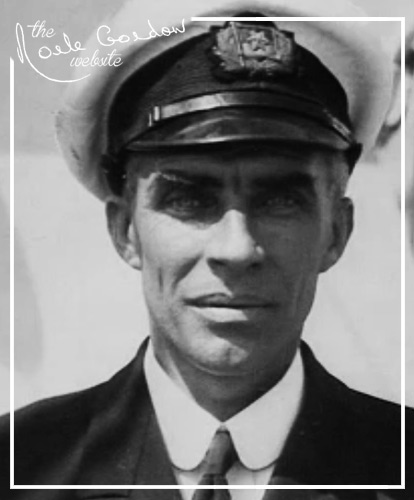
Noele’s father, James Gordon, was born in Aberdeen, Scotland, in 1896. He was a commander engineer in the Merchant Navy and was awarded his OBE for his service during the Second World War.
Because of his long periods away at sea, he spent relatively little time with his family.
He married Joan Yell at St Barnabas Church, Hendon, near Sunderland, in January 1918. The couple later separated, although it appears there was a reunion following James’s retirement in early 1957.
James died in 1957.
In a 1959 letter to her friend Reverend Bill Hinsley, Noele noted that her parents had just bought a cottage in Forest Row, Sussex. Her mother continued living between Noele’s London flat and James’s cottage, Hindleap, until they both moved to Weir End in 1963.
Joan Gordon
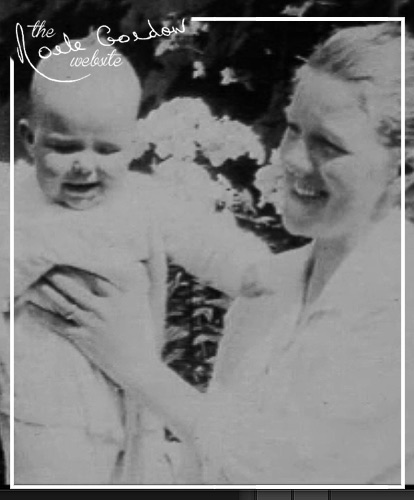
Noele’s mother was born on February 24, 1894, in Macduff, Banffshire, Scotland.
Joan, nicknamed “Jockey” because of her short height, had ambitions to become a performer but was too shy to take to the stage. Instead, she dedicated herself to raising Noele.
In later years, she overcame her shyness and appeared alongside Noele on several television programmes. She also appeared in Crossroads three times as a supporting artist, including as the very first guest to arrive at the motel in episode one.
Joan died on August 5, 1979.
John Robertson Dunn Crichton
Born on November 2, 1912, John Robertson Dunn Crichton was the son of a Wallasey stockbroker.
He worked his way up through the legal profession, eventually becoming a High Court Judge in the Queen’s Bench Division, a position he held from 1967 to 1977.
John was the man Noele had intended to marry. She had announced their forthcoming wedding to the press, but only days before the ceremony, following pressure from his family, he ended the relationship.
John died on July 12, 1985, aged 72.
George Black
George Black was a theatre mogul who urged Noele to change her name from Noel so that she would be identified as a woman on theatre billings.
Born on April 20, 1890, Black also ventured into the cinema business. Black’s Regal Cinema became a fixture on many British high streets during the 1930s and 1940s.
His sons, George Jr and Alfred, became the founding owners of Tyne Tees Television in the North East.
George Black died on March 4, 1945.
Lord Lew Grade
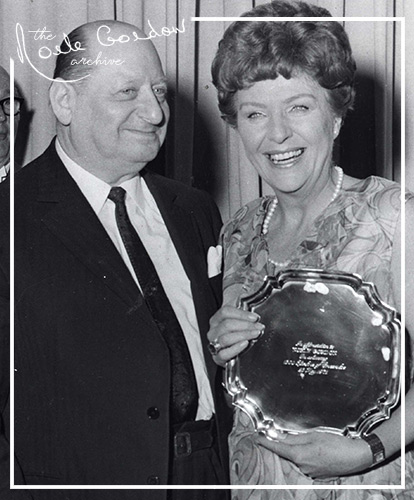
Born Louis Winogradsky on December 25, 1906, Lew Grade was a former performer and agent who founded Associated Television in 1954.
He gave ITV some of its best-loved programmes. Coming from working-class roots, Grade believed he understood what viewers wanted to watch rather than what television executives simply liked to discuss and what made them look good.
Speaking about Crossroads, he famously remarked: “I make shows for the viewers, not the critics.”
Lord Lew Grade died on December 13, 1998, aged 91.
Val Parnell
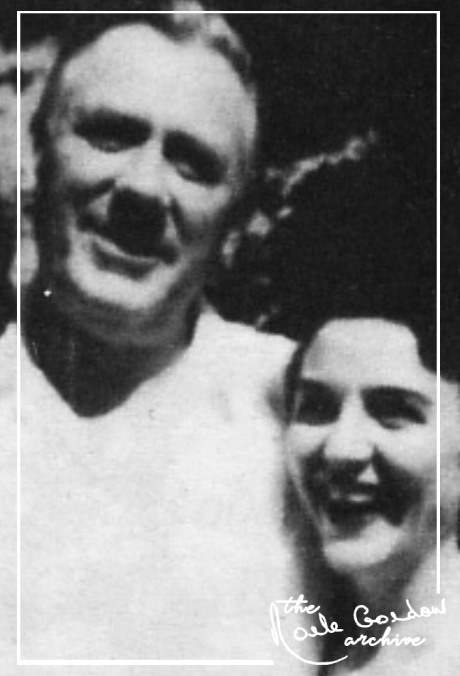
Valentine Charles Parnell was born on February 14, 1892.
He became a leading figure in British variety theatre through the Moss Group and later became a television executive with Associated Television, where he worked from 1954 to 1966.
Noele had a long-running relationship with Val that lasted around two decades.
Val died on September 22, 1972, aged 80.
Prince Littler
Born Prince Frank Richeux, Prince Littler was the eldest of five children born to Jules Richeux, a cigar importer, and his wife, Agnes May.
The family became involved in theatre operations, a tradition Prince continued when he established his own business and began acquiring theatres from the 1930s onwards.
As well as being a theatre mogul, Prince was one of the founding executives of Associated Television, alongside Val Parnell and Lew Grade.
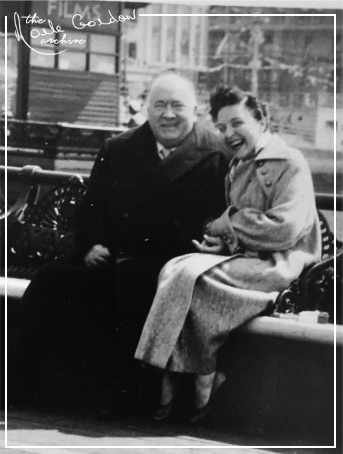
He had also been a close friend of Noele since the 1940s. A cosy photograph of the pair on Blackpool’s North Pier during Noele’s theatre years suggests that their friendship extended beyond their professional relationship.
Prince oversaw some of the UK’s biggest entertainment venues through the Moss Group, a company with which Noele worked regularly.
Noele never discussed her romantic relationship with Prince publicly. Like Val, however, he remained part of her personal photographic record, with photographs showing the pair together away from work.
Prince Littler died aged 72 in September 1973.
Anthony Waters
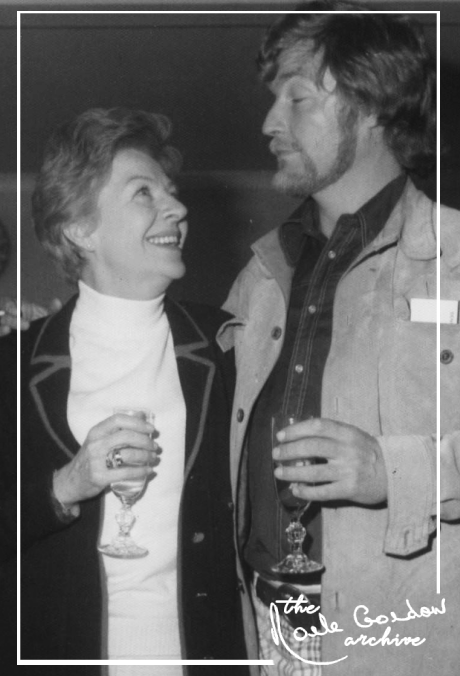
Anthony Waters was born in Olton, Solihull, in 1938.
He initially worked for his father, Major Gordon Waters, at the family fish-merchant business J. Vickerstaff and Co., which had been established in 1827.
He met Noele while performing in an amateur-dramatic production of her favourite musical, Brigadoon.
Noele encouraged him to “get into the business”, persuading him to audition for a show with her friend Larry Grayson in pantomime and to take part in the talent show New Faces. Coincidentally, he won the competition.
Noele described him as “her Viking”.
Anthony died in 2005, aged 67.
Pat Astley
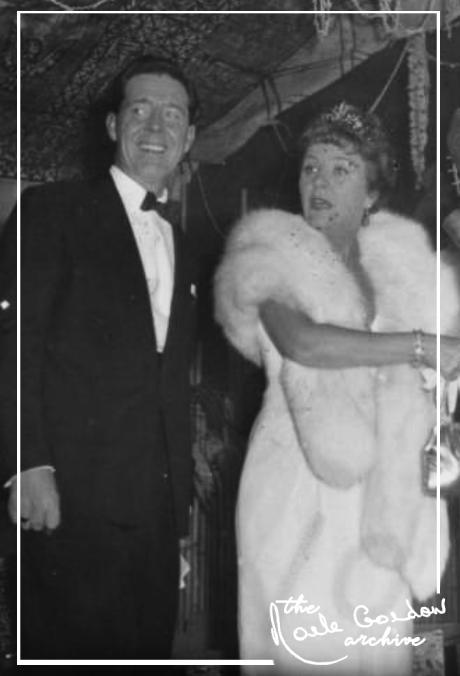
Pat Astley was an ATV continuity announcer who co-hosted several programmes with Noele, including Rainbow Rooms.
It was rumoured around the Aston Television Studios during the 1960s, following Noele’s split from Val Parnell, that Noele and the married Pat had “formed a special friendship”.
Neither Noele nor Pat confirmed the relationship publicly. However, Pat’s family later noted that the rumours had been true and that they were aware of the relationship.
John Bentley
If Pat Astley had been a “rebound” relationship following Noele’s split from Val Parnell, it was soon followed by another important relationship when handsome film actor John Bentley arrived at Crossroads in 1965.
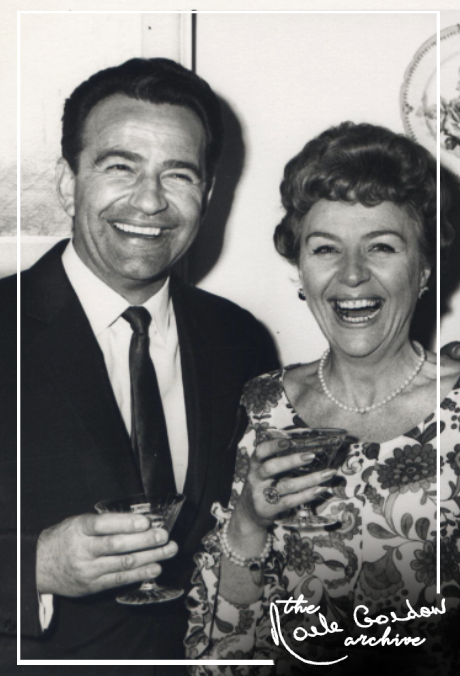
Noele had first met Bentley when she interviewed him about his career on Midland Profile. The pair subsequently worked together many times on ATV’s live entertainment programme Lunchbox, where Bentley appeared as a singer.
When Reg Watson was looking for suggestions about who should play Meg’s love interest, businessman Hugh Mortimer, Noele telephoned John and asked him to take the role.
At the time, John was not married to Patsy Smith — the couple would marry not long before his death in the 2000s — but Patsy and John were dating during the same period in which the on-screen romance between Meg and Hugh was being mirrored off screen between Noele and John.
As Nolly’s chauffeur and housekeeper Ken Felton later observed: “The problem Noele had is all the men she fell in love with were already married, so she never found a man for herself.”
Michael Summerton recalled: “It may have been a deliberate life choice, after being humiliated [by John Crichton] she looked for relationships that wouldn’t require commitment.”
The press reported that John and Noele fell out in 1975 after he refused to fly abroad to record their honeymoon scenes.
Chris Douglas, who played Martin in Crossroads, gave a different account. He said that things had been frosty between the pair from the moment he returned to the serial in 1973, having originally left in 1967.
According to Chris, when John entered the rehearsal rooms he was trying to woo Noele with flowers. Her response, he recalled, was: “Oh no, not him.”
Patsy was unaware of this earlier falling-out and was reportedly surprised by its revelation.