Throughout her career, Noele Gordon supported more than 30 charities, ranging from the Royal National Lifeboat Institution and the Royal National Institute for Blind People to numerous local good causes across the Midlands.
However, perhaps her most enduring charitable achievement was one she helped establish in the 1970s: Crossroads Care.
The charity was launched in 1974 as the Crossroads Care Attendant Scheme and has subsequently operated under several variations of that name, including Crossroads Caring for Carers and Crossroads Care.
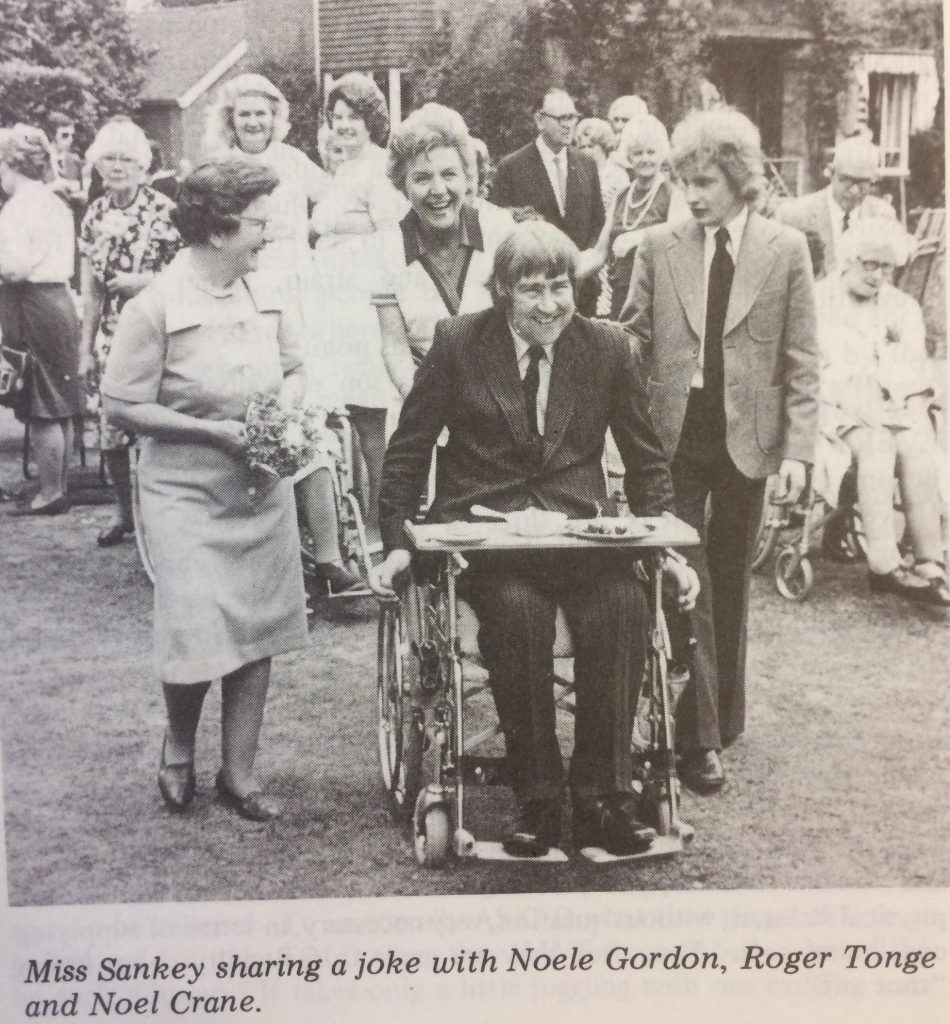
From a Crossroads storyline to a real-life service
The needs of carers first came to the attention of Crossroads producer Reg Watson through a storyline involving the character Sandy Richardson, played by Roger Tonge.
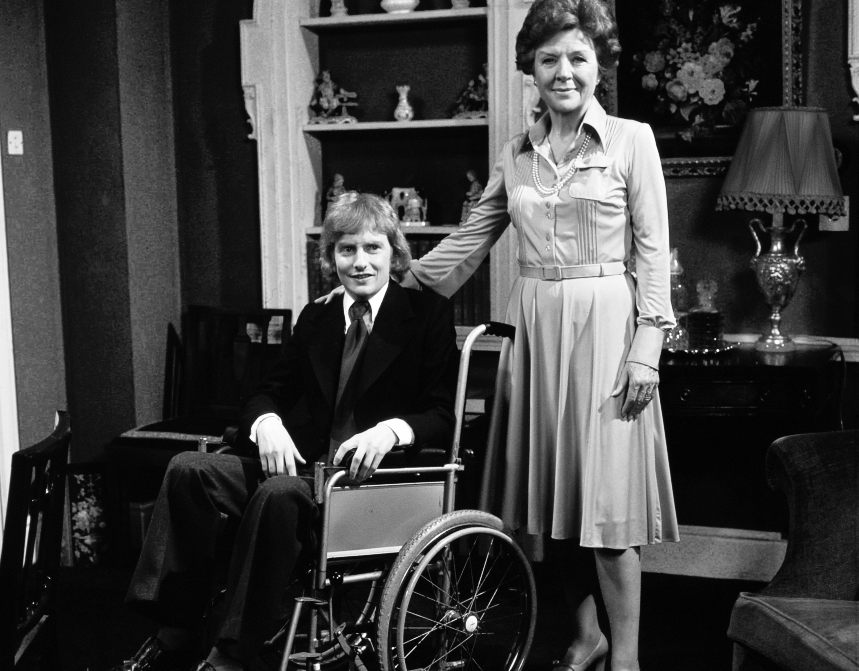
Sandy had been a regular character since 1964 and, following a car accident, was left paraplegic. Viewers followed his dramatic change from an able-bodied young man to someone dependent upon the care of his mother, Meg Richardson, played by Noele Gordon.
An ATV Network press release issued at the time explained the purpose of the storyline:
“The idea is to show viewers that Handicapped people value their independence and also the devoted care given to them by their relatives.”
The storyline presented the realities of disability and caring to millions of Crossroads viewers. But it also created an unexpected problem for the programme itself.
When Noele Gordon, playing Sandy’s mother and principal carer, was due to take a four-week holiday, the scriptwriters were faced with a very real question: who would look after Sandy?
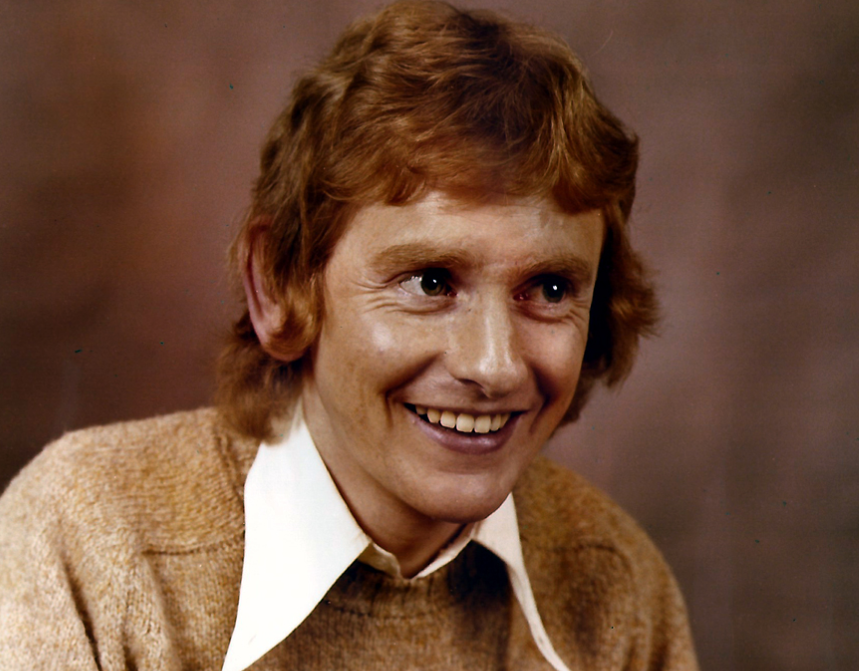
Crossroads Care / Crossroads Caring for Carers
The writers soon recognised that the dilemma faced by Meg and Sandy reflected an issue experienced by countless real-life families: carers who had no other help with their caring responsibilities and no opportunity to take a break.
It was Noele Gordon who began the process of encouraging ATV to ‘do something about it’. At the time, there was no government-funded assistance available and no charity providing the type of support that was needed.
Within Crossroads, Meg helped to launch a fictional Caring for Carers scheme. Letters and telephone calls soon began arriving at ATV from viewers asking about the service. Concerned that there was no real assistance available to the people contacting the television station, Noele discussed the situation with ATV’s medical adviser, Dr Richard Hudson-Evans, who supported her suggestion that the fictional Caring for Carers scheme should become a real service.
The proposed organisation would give relatives the opportunity to take a break from caring for their loved ones, while ensuring that the person they cared for continued to receive support.
Noele, Dr Richard Hudson-Evans and producer Reg Watson approached ATV Network Senior Director Leonard Mathews, who agreed that the television company would make funding available for a pilot scheme. The initial trial would operate for two years in Rugby, Warwickshire, and launched in 1974.
ATV provided the founding £10,000.
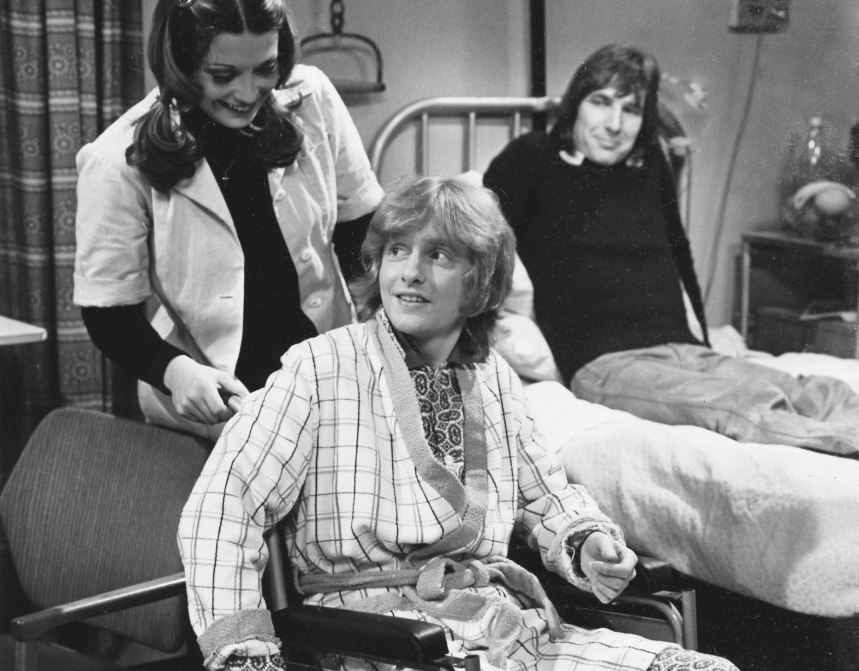
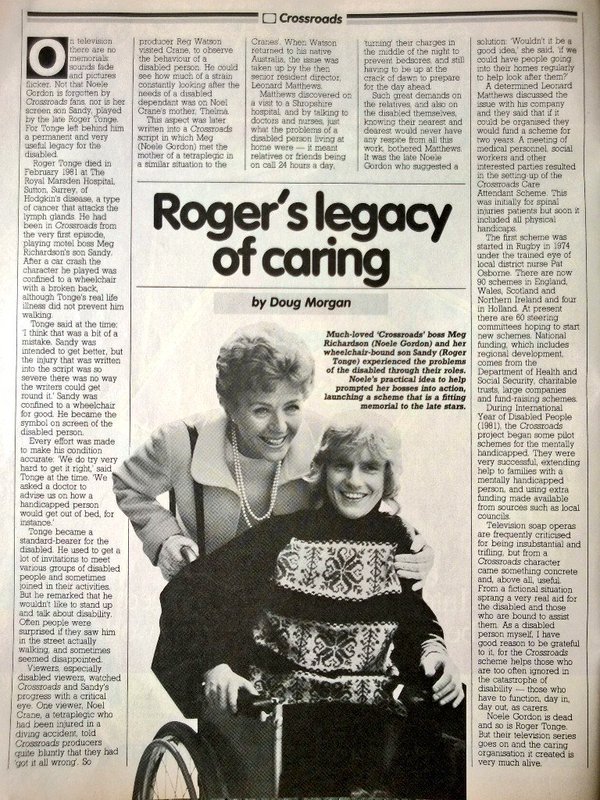
Rogers Legacy of Caring — TV Times, 1985
The story of Crossroads Care and its origins was revisited in a TV Times feature published in 1985, written by Doug Morgan.
The article, titled ‘Rogers Legacy of Caring’, reflected on the lasting impact of both Noele Gordon and Roger Tonge and the organisation that emerged from the Crossroads storyline.
Morgan began by observing:
“On television there are no memorials; sounds fade and pictures flicker.”
Yet, as he noted, neither Noele Gordon nor Roger Tonge had been forgotten by Crossroads viewers. More importantly, they had left behind “a permanent and very useful legacy for the disabled.”
Roger Tonge died in February 1981 at the Royal Marsden Hospital, Sutton, Surrey, from Hodgkin’s disease, a type of cancer affecting the lymph glands. He had appeared in Crossroads from its very first episode, playing motel boss Meg Richardson’s son Sandy.
Following Sandy’s car accident in the programme, the character was confined to a wheelchair with a broken back. Tonge’s own illness did not prevent him from walking in real life.
At the time, Tonge said:
“I think that was a bit of a mistake. Sandy was intended to get better, but the injury that was [eventually] written into the script was so severe there was no way the writers could get round it.”
Reg Watson, however, said in an interview at the time that it had always been his intention for Sandy to remain disabled. The character was consequently confined to his wheelchair permanently.
Sandy became an important on-screen representation of a disabled person, and considerable effort was made to portray his condition accurately. Tonge explained:
“We do try very hard to get it right.”
The production consulted medical professionals on practical aspects of Sandy’s life, including how a disabled person might get out of bed. Tonge consequently became something of a standard-bearer for disabled people.
He received numerous invitations to meet groups of disabled people and sometimes joined in their activities.
His portrayal became so closely associated with disability that people were occasionally surprised — and sometimes apparently disappointed — when they encountered Tonge walking in the street. Crossroads viewers, particularly disabled viewers, followed Sandy’s progress closely and watched the portrayal with a critical eye.
Noel Crane and the real-life inspiration
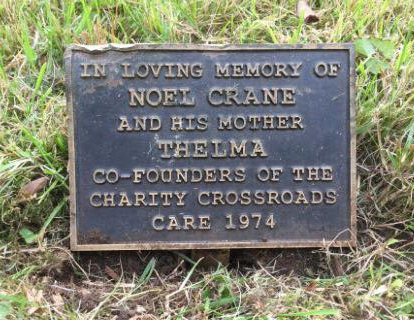
One of those viewers was Noel Crane, a tetraplegic who had been injured in a diving accident. Crane contacted ATV with suggestions arising from his own experiences, and producer Reg Watson subsequently visited him to observe the behaviour and everyday realities of a disabled person.
Watson saw first-hand the strain that constantly caring for a disabled person could place upon a family. In particular, he observed the demands placed upon Noel Crane’s mother, Thelma.
This aspect of the Crane family’s experience was subsequently reflected in Crossroads, when Meg met the mother of a tetraplegic character who was facing circumstances similar to those experienced by the real-life Crane family.
Leonard Mathews sees the problem first-hand
ATV’s Leonard Mathews also investigated the realities of living with disability at home. During a visit to a hospital in Shropshire, and through conversations with doctors and nurses, he learned more about the demands placed upon both disabled people and those caring for them.
Relatives or friends could effectively be required to remain on call around the clock. They might have to turn a disabled family member during the night to help prevent bedsores, only to be up again at first light to prepare for the day ahead.
The demands placed upon carers were immense. There was also the emotional burden of knowing that their disabled relatives might never have any respite from the constant demands of care — and that the disabled person themselves could be acutely aware of the strain placed upon those closest to them.
It was Noele Gordon who suggested a practical solution:
“Wouldn’t it be a good idea if we could have people going into their homes regularly to help look after them?”
ATV subsequently investigated the creation of an organisation which the company would fund for its first two years of operation.
A meeting involving medical personnel, social workers and other interested parties ultimately resulted in the establishment of the Crossroads Care Attendant Scheme.
The original scheme was intended initially for people with spinal injuries, but its remit soon expanded to include all physical handicaps.
The first scheme began in Rugby in 1974.
A growing legacy
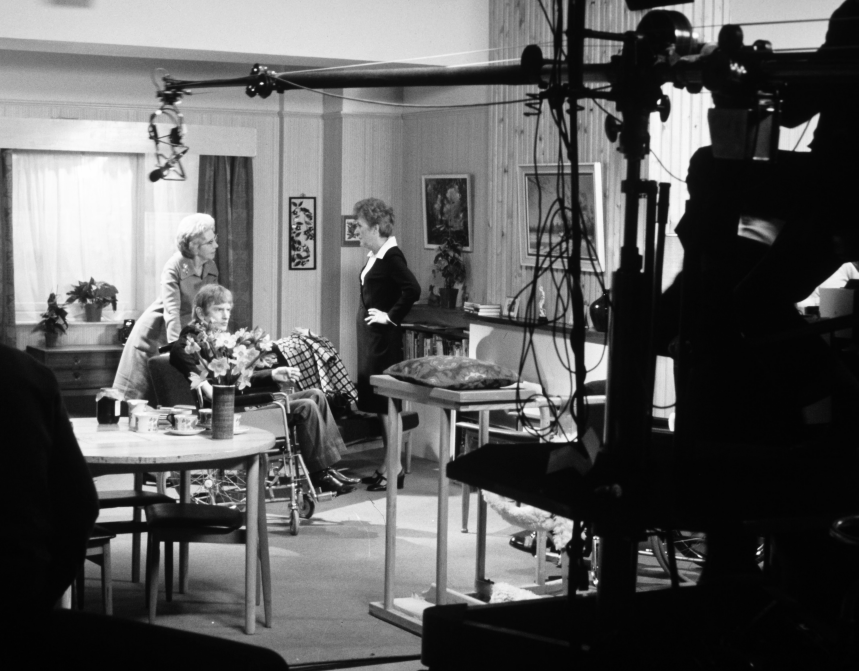
The work continued to develop beyond the original scheme. During the International Year of Disabled People in 1981, the Crossroads project began pilot schemes supporting people with mental disabilities, which proved highly successful.
What had begun as a storyline in a television soap opera had consequently developed into something tangible: a real organisation providing practical support to disabled people and, crucially, to the relatives who cared for them.
As Doug Morgan wrote in TV Times in 1985:
“Television soap operas are frequently criticised for being insubstantial and trifling, but from a Crossroads character came something concrete and, above all, a very real aid for the disabled and those who are bound to assist them.”
Writing from his own experience as a disabled person, Morgan added:
“As a disabled person myself, I have good reason to be grateful to it, for the Crossroads scheme helps those who are too often ignored in the catastrophe of disability – those who have to function, day in, day out, as carers.”
Noele Gordon and Roger Tonge had both died by the time the article was published. But the Crossroads series continued (until 1988), and the organisation that had grown from its storyline was very much alive.
The legacy of Noele Gordon, Roger Tonge, Reg Watson and the many people involved in bringing the scheme to life therefore extends far beyond television.
What began with a fictional family facing the everyday realities of disability helped inspire a real-world service dedicated to supporting disabled people and the carers who look after them.